Learning the Science

You don’t need a green thumb to grow plants in an Aquaponics system. It does all the growing for you. Here is a simple walkthrough of how Aquaponics works:

 It Starts with the Fish

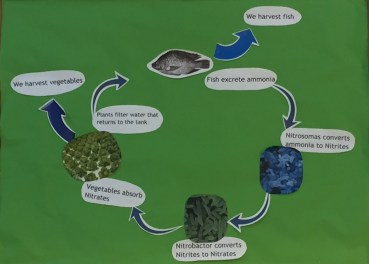
A farm of about 150 fish is contained in a tank that holds 210 gallons of water. Fish waste consists of mostly ammonia, an odorless gas that is harmful to fish.

Special bacteria called Nitrosomas help convert ammonia to nitrites, which is less toxic than ammonia.

However, if nitrite levels keep accumulating in the tank, it would eventually kill the fish.

A final step occurs to convert nitrites to nitrates with the help of Nitrobactor bacteria.

Plants are able to absorb the nitrates through their roots that settle in the water. It is a primary source of protein to increase plant growth.

In turn, the plants filter the water that returns back to the fish tank.

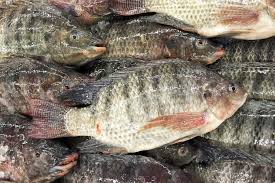
Tilapia fish are used because they are easy to maintain in a tank. They are resistant to disease and can handle water quality and temperature changes. Plus you’ll never run out of them since they are easy to breed and mature faster than other fish.

However, there are challenges to harvesting the Tilapia and selling them. There is a health risk when consuming the Tilapia fish in an Aquaponics system.

Research is still being done on what to do with the Tilapia fish.
 

img_3104-1
The Aquaponics Cycle


The Clarifier Process

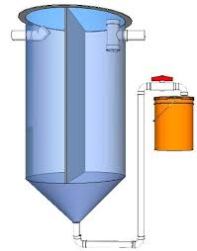
Before the nitrates can travel to the plants, it must go through the clarifier tank. The clarifier separates the solid waste from liquid waste.

The solid waste is left behind in the tank and settles to the bottom. While the liquid waste flows out of the top pipe and into the troughs that are holding the plants.

Aquaponics has zero discharge, which means that all solid and liquid waste is used for plant growth.

Because all the water in the system is recirculating, 90% less water is used than traditional agriculture to grow the same amount of produce.
tank
The Clarifier Tank

Plant Holding Equipment

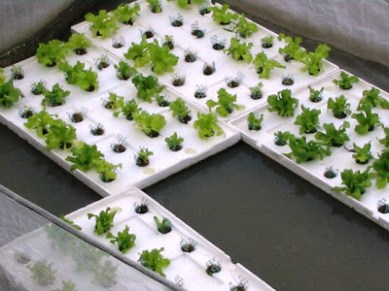
Plants are grown on floating rafts called float beds, with their roots suspended in the nutrient-rich water. The rafts allow for easy planting, transplanting, and harvesting of produce.

The plants can be grown closer together since there is less competition for nutrients and water that are readily available in the system.

In addition, the system produces over 35 times the amount of crops per square foot due to having access to a lot of nutrients.
raft
Float Beds

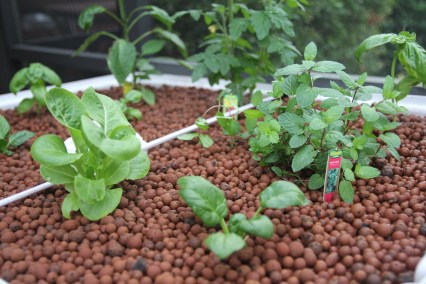
The soil is not used in this system, but stones are a great substitute for growing large fruiting plants, like tomatoes.

Stones are placed in media beds that also provide enough surface area to grow bacteria that converts ammonia waste to nitrates.
media.jpg
Media Beds

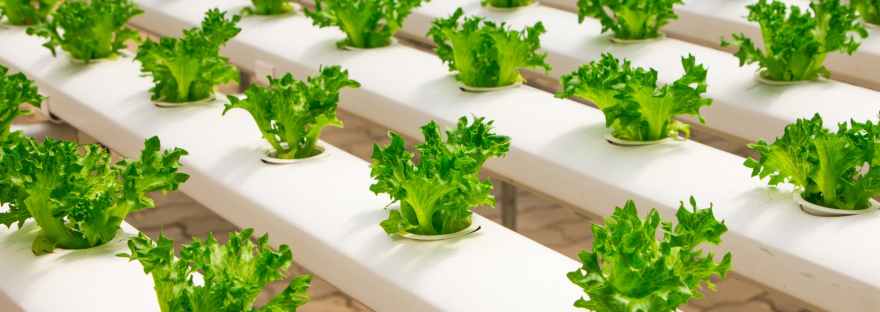
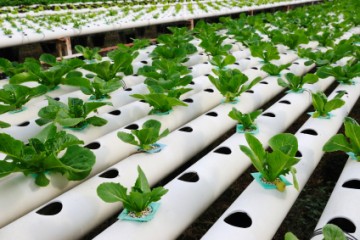
For seedling production, Nutrient Film Technology (NFT) Gutters are used. It is also effective for growing fodder and micro greens.
NFT.jpg
NFT’s

Introducing the Plants

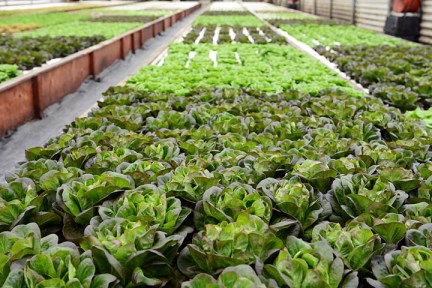
The Steelton-Highspire greenhouse contains a lot of produce. Every Friday, plants get harvested and are then sold to the community.

The NFT gutters hold the lettuce, bok choy, and red/green salanova.

The float beds make up the majority of the plant production in the greenhouse. Green lettuce, kale, green onion, and red-veined sorrel.

Media beds hold large fruiting plants such as figs, tomatoes, cucumbers, peppers, chives, dwarf bananas, and kale.
lettuce.jpg
The Produce

You can visit the greenhouse anytime. Contact Bob Welsh or Crystal Huff for more information on Aquaponics and the greenhouse.


How to Maintain a Greenhouse

It is never a boring day in the greenhouse. Working in the greenhouse can be fun at times, but it requires a lot of maintenance to keep it running.

A Battle with the Fish

fish.jpg
Tilapia Fish

One of my daily jobs is to feed the Tilapia fish. The bigger tanks need one cup of food. You have to be quick though if you don’t want to get a morning shower.

All the fish race up to the surface and water is splashed everywhere. You lift up the net and just dump all the food into the tank in one go. Then quickly step back to avoid the water. Make sure to always wear your worst when feeding the fish.

We also have to feed the baby Tilapia fish with just a pinch of fish food. If you hover your hand over the tank, the fish will instinctively swim to the surface to get the food.

Same goes for the bigger fish. The drawback of feeding the bigger fish is that sometimes the fish food spills outside the tank.

You would have to pick the food off the ground. We always make sure to keep the greenhouse floors clean.

Killing the Pests

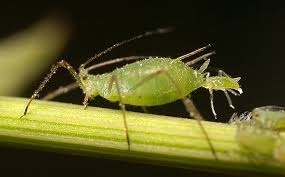
aphid

A Green Aphid

Pests are the enemies of the greenhouse. They can do a lot of damage to plants by leaving holes. My job is to remove them, so the plants are in perfect condition for harvest day.

These pests come in the form of aphids. Small sap-sucking bugs that are hidden under a leaf. You’re lucky if there is only 1 or 3 of them on a leaf. The worst case scenario is that there is an infestation on the plant and it must be immediately removed.

Bok Choy that are grown in the NFT’s is more susceptible to an aphid infestation. There has been ongoing research on figuring out what is the best environment to grow Bok Choy.

If there are a few aphids, you can kill them by squeezing them with your fingers. Gloves are provided if you do not want to use your bare hands.

Aphids are not the only pests who wreak havoc on the innocent plants. Caterpillars and slugs like to snack on the leaves.

In order to control the level of pests, we spray the plants with a natural substance to kill the pests without damaging the plants. Another method is to introduce beneficial insects into the greenhouse to kill the pests for us like wasps and spiders.

Scrubbing, Scrubbing, and More Scrubbing

My least favorite thing to do in the greenhouse is scrubbing the equipment clean. The equipment gets dirty from the water and plant residue. We have to take a sponge and scrub the residue off.

The float beds and media beds get the most care due to having so much plant growth. The NFT’s are sometimes taken apart to be washed inside and outside. Clothes that you don’t normally wear are ideal for this job.

Fish tanks need a good scrub down as well. There is a magnet scrubber attached to the window to scrub the green algae off.

The rims of the fish tank are also scrubbed down. You stand on a stool, lift the net up, and scrub the rim.

Sometimes you have to scrub a little deeper into the water to get the residue off. Not too deep though or your hand might become fish food. It’s better to clean the rims when the fish are already fed.

A Wrap-Up

The day is not over yet. Make sure to pick up after yourself. For water spills, we use a vacuum to suck up all the water.

Sometimes leaves fall to the ground after pest control, so we take a broom to brush them off. We check the aisles of the float beds, media beds, and NFT’s for any leaves or stones that fell out.

The fish get fed again and we record that in the fish log. We have to take record of everything we do in the greenhouse, like harvesting or transplanting.

There is also an indoor Aquaponics system in the school that gets the same treatment as the greenhouse but on a low scale.

Working in a greenhouse can be rewarding, but it takes a lot of work to keep it running in perfect condition. We only need the best for our community.


Working with Aquaponics

How I Got into Aquaponics

I had just graduated from SciTech High School in June 2015. I secured my first summer job for a position at a greenhouse.

It was a newly built structure behind the Steelton Highspire High School. I applied for this job through my sister’s connections.

It was a six-week long program run by School to Table, a program that provides  STEM knowledge to students.

I would be stationed in the greenhouse to help maintain their newest technology, Aquaponics.

The first Aquaponics system was established in Marshall Math/Science Academy where my sister attends.

She was one of the selected students to be part of her school’s Aquaponics team.

I wanted to give it a shot since it was something my sister was involved in and it piqued my science interest.

I heard of hydroponics, which is the process of growing plants in water without soil.

However, Aquaponics is different in terms of utilizing fish to provide nutrients to plants and using water at the same time.

I found it fascinating and odd. How could fish help plants grow?

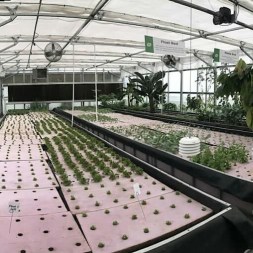
greenhouse
The Steelton Highspire High School Greenhouse

First Day at the Greenhouse

I found my answer on my first day at the job. No one gave me the heads up to dress down.

I arrived at the front school entrance dressed in a white blouse, black dress pants, and black flats.

I pressed the call button and the office told me to go the back of the school. I was confused because I thought I would be working inside the school as my sister. I took the shortcut down a small hill that led to the back.

Wet mud stained my flats and I found myself stumbling on the dirt while heading toward the greenhouse.

I was taken aback by the greenhouse’s large size. My high school was small compared to this. The greenhouse stretched quite long.

Huge fans propelled and vibrated the ground like an earthquake.

I was greeted by Jodi Foster, my supervisor. She was casually dressed in a t-shirt and jeans. And did I mention it was scorching hot that day?

I should have changed into more comfortable clothes, but I wanted to be presentable.

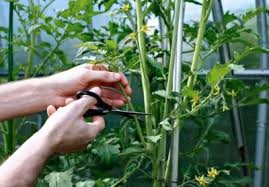
plants
Pruning Leaves


Inside the Greenhouse

Jodi led me inside. The first rule of the greenhouse was to close the first door before opening the second door that led into the actual greenhouse itself. This was to prevent contamination with the outside, like pests.

Before opening the second door, you had to wash your hands so you would not contaminate the plants.

I could hardly hear myself think with the two large fans at the front that kept the greenhouse cooled down during a hot day.

My eyes were drawn to the lettuce sitting in the long, white gutters called NFT (). NFT are effective for growing microgreens.

You couldn’t miss the large, blue fish tanks in the center of it all. There was a window built into the fish tank so you could see inside.

Big Tilapia fish were swimming around. It looked really crowded in there. A magnet scrubber was on the window for cleaning the green algae off the window.

Jodi introduced me to the team. Two college students from Messiah College were overseeing the entire program. Along with a selected few high school students from Steelton-Highspire.

I was shy at first. However, I have gotten to know really interesting people during the program.

Most of them used this summer break to gain more experience in the STEM field. Others wanted to make their resume stand out.

Whatever the case, we all had fun doing something that was new and beneficial to the community.

small
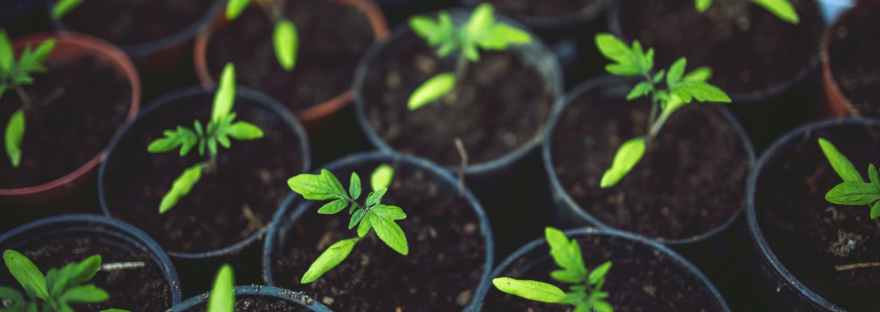
Baby Plants